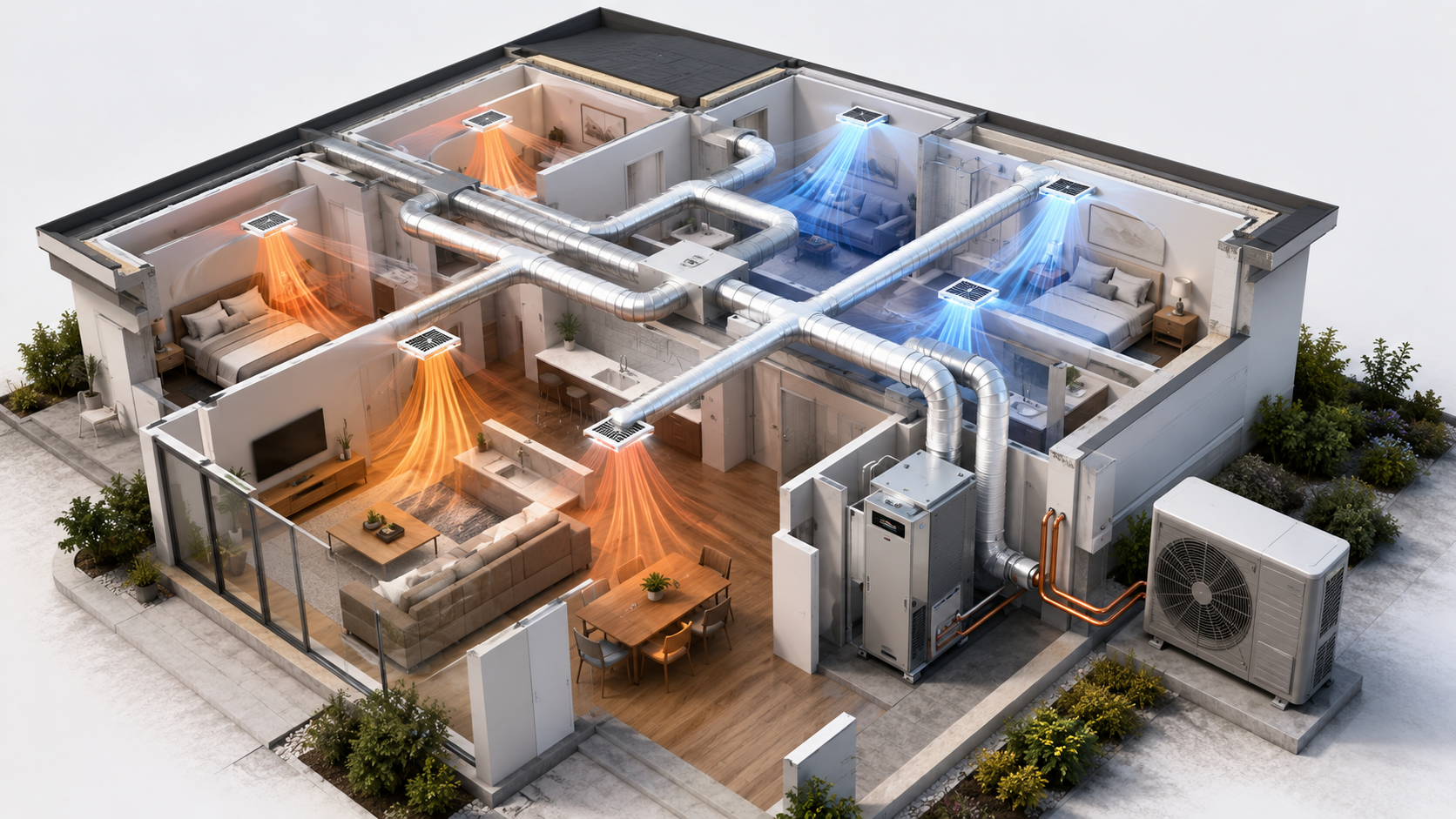
Ducted Heat Pump Systems
Ducted heat pump systems provide heating and cooling by moving conditioned air through a network of ducts. The air is usually delivered to different rooms through vents or registers, similar to a traditional central heating and cooling system.
For many homes and buildings, ducted heat pumps can be a practical choice because they can use existing ductwork and provide whole-building comfort from one central system.
How Ducted Heat Pumps Work
A ducted heat pump usually includes an outdoor unit, an indoor air handler, and a duct system.
In heating mode, the heat pump collects heat from outside and transfers it indoors. The indoor air handler then moves warm air through the ducts and into different rooms.
In cooling mode, the process reverses. The system removes heat from indoor air and releases it outside, helping the building stay cool.
Where Ducted Systems Are Commonly Used
Ducted heat pumps are often used in homes, small commercial buildings, and buildings that already have central air distribution.
They can be especially suitable for projects where the goal is to replace or reduce the use of a furnace and air conditioner while still using the existing duct layout.
Benefits of Ducted Heat Pump Systems
One of the main benefits of a ducted heat pump is whole-building comfort. Instead of heating or cooling only one room, the system can distribute air to multiple areas through the duct network.
Ducted systems can also provide both heating and cooling from one system. This can help simplify building equipment and reduce the need for separate heating and air-conditioning units.
Another benefit is appearance. Since much of the system is hidden in ducts, ceilings, walls, or mechanical spaces, the visible indoor equipment is usually limited to vents and controls.
Things to Consider
The condition of the ductwork is very important. Leaky, poorly insulated, or poorly designed ducts can reduce system efficiency and comfort.
Before installing a ducted heat pump, the duct system should be checked to make sure it is properly sized, sealed, and insulated. Airflow must also be balanced so rooms receive the right amount of heating and cooling.
The building’s insulation, windows, air leakage, and heating/cooling load should also be considered. A heat pump that is too small or too large may not perform as expected.
Ducted vs Ductless Systems
Ducted systems are usually better for whole-building heating and cooling when ductwork already exists.
Ductless systems, also called mini-splits, may be better for buildings without ducts, additions, apartments, basements, or individual rooms that need separate temperature control.
In some projects, both systems can be used together to improve comfort in different areas of the building.
Final Thought
Ducted heat pump systems can be a strong option for buildings that need central heating and cooling. When the ductwork is in good condition and the system is properly designed, a ducted heat pump can provide efficient, comfortable, and year-round indoor climate control.